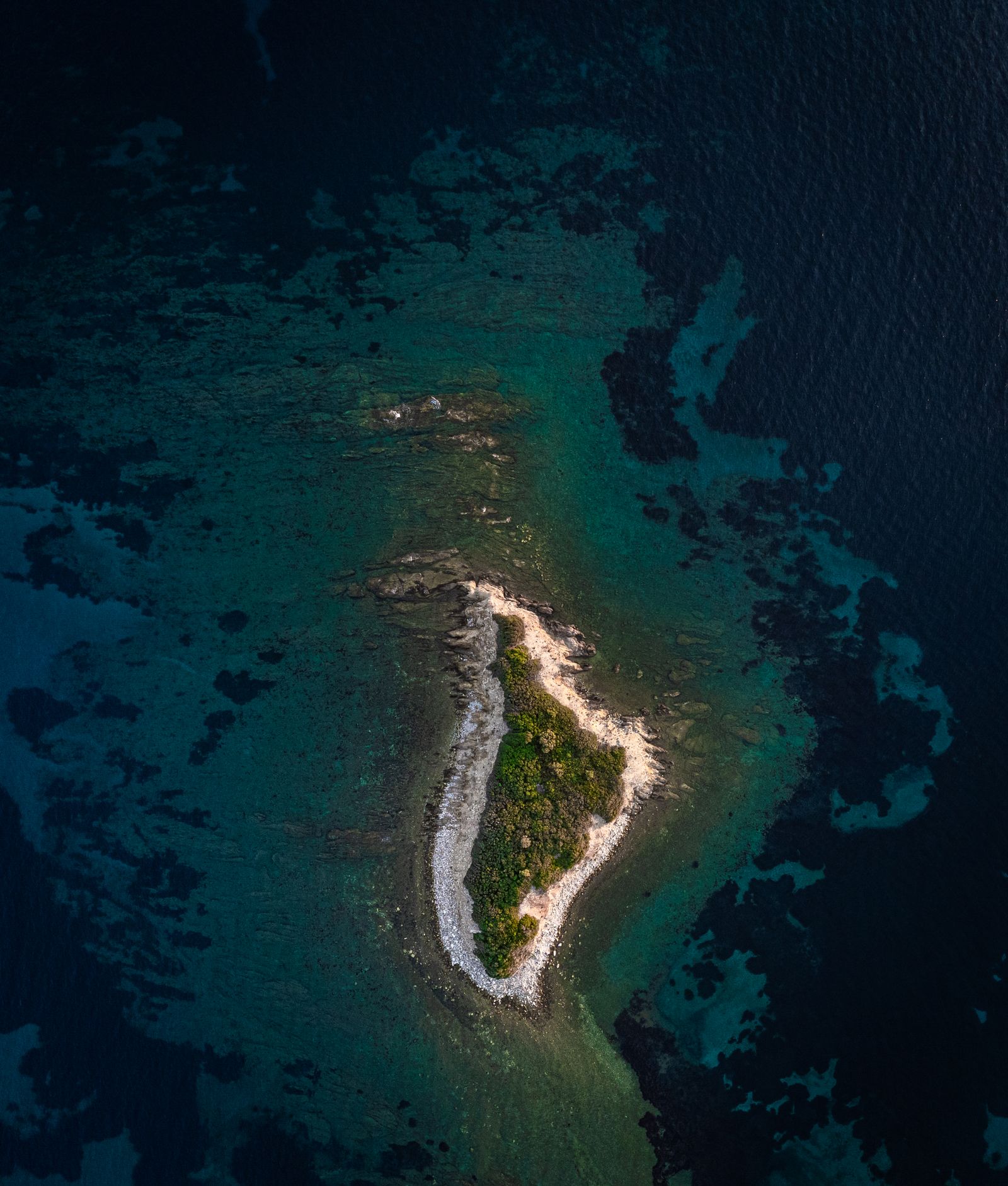
The Island
A portrait, held in writing.
- Capital city
- Fish market
- Hulhumalé bridge
Malé is among the most densely populated capitals in the world — roughly a quarter-million people on a single island just over two square miles. The whole country touches it at some point: the morning ferries, the fish lined up at the market, the council halls, the schools, the cardiology referrals. Hulhumalé is the city's reclaimed extension, drawn from the lagoon east of Malé in two phases since 1997 and connected since 2018 by the Sinamale Bridge. It carries the breathing room that Malé proper does not — a designated swimming beach, a wider grid, a different urban pace. NYRA holds the two as one short urban opening: the working face of the country at full pitch, before the resort week settles the day back into lagoon time.
For the traveller who wants the urban Maldives — the tea-rooms and the fish market, the old coral-stone mosque, and the long bridge across to the new island that the country is still building.
The Register
The island, at a glance.
- AtollKaafu — the capital
- Composed ofMalé · Hulhumalé · Vilingili
- PopulationApprox. 250,000 — Greater Malé
- Area~2.2 sq mi (Malé proper)
- The bridgeSinamale Bridge · opened MMXVIII
- When to goYear-round · December–April for cool tea-room hours
Field views
The island, seen.
06 · selected views
The Shape of a Day
How the day holds.
A sketched register of one day on the island — the hours we tend to compose around. Yours will be drawn for the season and the company you keep.
- VI.30
The fish market at dawn
Yellowfin lined up on ice; the auction in Dhivehi; the steps of the harbour-wall held by men in long trousers and sweet milk tea.
- IX.00
The old quarter
A slow walk through the coral-stone lanes — Hukuru Miskiy (the old Friday Mosque), Republic Square, the Tsunami Monument. Held quietly, before the heat.
- XII.30
A hedhikaa tea-room
Mas-roshi, fish bajiya, gulha, the long sweet tea — the small civic ceremony of the Malé afternoon.
- XV.00
The bridge crossing
A taxi across the Sinamale Bridge to Hulhumalé — the long view of the harbour, the airport island in the distance.
- XVII.30
The Hulhumalé beach
The designated swimming end at phase 2 — the wider grid, the calm lagoon, a hour's walk along the new shore.
- XX.00
A rooftop supper
Back in Malé — a rooftop facing the harbour lights, a long supper of yellowfin and rice, the bridge a thin gold line across the channel.
Eat
Where the day lays its table.
- Working harbour
The fish market tea hour
Steps of the market wall at dawn — tea, mas-roshi, the auction in Dhivehi. NYRA holds a quiet introduction to the men who hold the steps.
- Civic
A hedhikaa tea-room
A long sit at one of Malé's oldest tea-rooms — short eats, sweet milk tea, the slow afternoon hour.
- Private
A rooftop supper
Composed by NYRA on a rooftop overlooking the harbour and the bridge — the urban hour at its kindest.
Stay
How the night holds you.
- Old quarter · 12 rooms
Boutique hotel · Malé
A small house in the old quarter — coral-stone walls, a verandah on a quiet lane, breakfast in a courtyard.
- Phase 2 · 1–2 bedroom serviced
Modern apartment · Hulhumalé
A modern serviced apartment on the wider grid of Hulhumalé — closer to the beach, closer to the airport, the breathing room Malé proper does not carry.
Ways In
How to arrive.
Every transfer is held privately and aligned to your arrival window. We hold the timing; you keep the day.
- From Velana InternationalSpeedboat · 5 minutes to Malé · 10-min taxi to Hulhumalé
- Public ferryContinuous service between airport, Hulhumalé and Malé
- The bridgeSinamale Bridge — taxi in 8 minutes, or a 30-minute walk
Field Notes
The small things, quietly held.
The particulars a guidebook would miss — the lines we keep about this island, drawn from the journeys we have composed here.
- 01
Malé is among the most densely populated capitals in the world by area — the entire country lives, at some point, against the rhythm of this single mile-wide island.
- 02
The Sinamale Bridge opened in 2018 and quietly reshaped how the country moves between its capital, its airport island (Hulhulé) and its planned urban extension (Hulhumalé).
- 03
Hukuru Miskiy — the old Friday Mosque — is one of the oldest coral-stone mosques in the Indian Ocean. Its boundary stones carry traces of the Buddhist site that preceded Islam in the country.
- 04
The designated swimming beach on Hulhumalé's phase 2 is the only resort-style beach within the greater capital — a quiet escape on the last afternoon before flying out.
Begin
A journey to Malé.
Tell us the season, the shape of your days, and the kind of quiet you are after. We will write back within a day.